

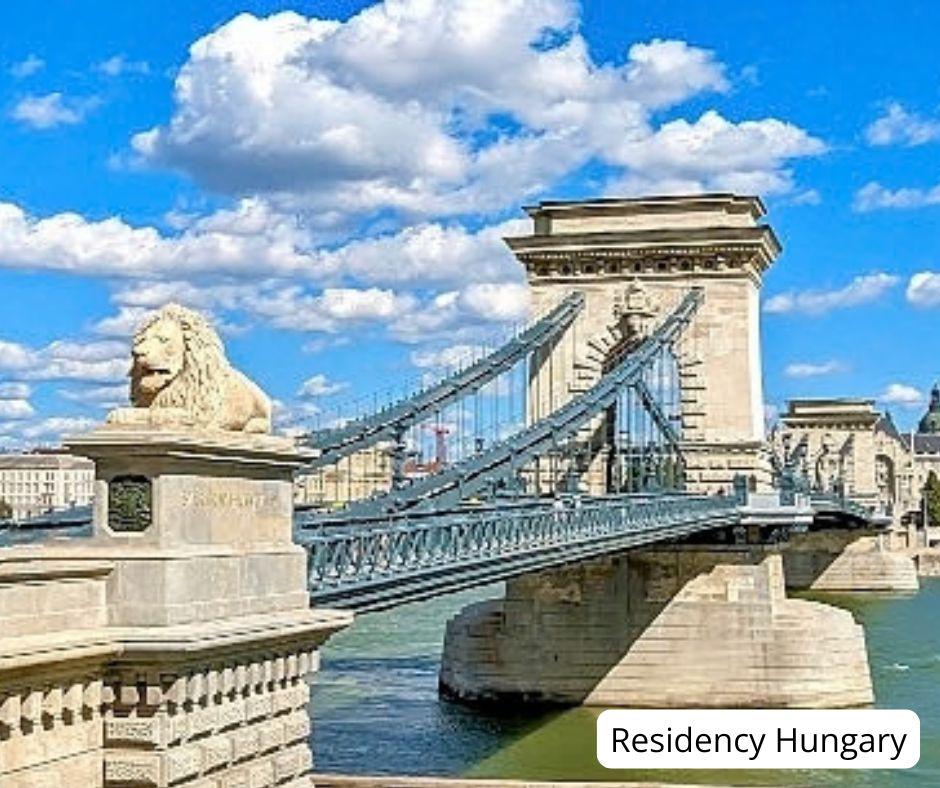
Its location at the very heart of the city makes the Chain Bridge an ideal starting point for exploring Budapest’s most celebrated attractions. On the western bank, visitors are welcomed by the historic Castle District, a UNESCO World Heritage Site featuring Buda Castle, Matthias Church, and the fairy-tale towers of Fisherman’s Bastion. Across the river on the Pest side, elegant nineteenth-century architecture lines Széchenyi Square, including the magnificent Hungarian Academy of Sciences and the Art Nouveau masterpiece of Gresham Palace. A short stroll north leads to the iconic Hungarian Parliament Building, whose riverside silhouette is among the most photographed landmarks in Europe.
Completed in 1849, the Chain Bridge was the first permanent bridge to connect the two banks of the Danube in what would later become Budapest. Before its construction, crossing the river depended largely on ferries and temporary pontoon bridges, which were frequently disrupted by weather and seasonal flooding. The visionary statesman Count István Széchenyi recognized the need for a permanent connection that would strengthen commerce, encourage development, and bring the two cities closer together. His ambitious initiative transformed the future of the Hungarian capital, and the bridge proudly bears his name in recognition of his contribution.
Designed by the distinguished English engineer William Tierney Clark and constructed under the direction of Scottish engineer Adam Clark, the Chain Bridge represented a remarkable technological achievement of its era. Its completion marked a turning point in the city’s development, paving the way for the unification of Buda, Pest, and Óbuda into a single metropolis in 1873. More than a century and a half later, it remains one of Hungary’s most celebrated landmarks and a powerful symbol of national identity.
The bridge has endured revolutions, political upheavals, and world wars, standing as a testament to Budapest’s resilience. During the Second World War, retreating German forces destroyed the bridge in January 1945, leaving only its monumental stone towers standing above the river. Following an extensive reconstruction effort, the bridge reopened in 1949 on the centenary of its original inauguration, restoring one of the city’s most treasured architectural icons to its former glory.
From an engineering and architectural perspective, the Chain Bridge remains a masterpiece of nineteenth-century design. Stretching 375 metres across the Danube, its elegant roadway is suspended from colossal iron chains anchored on either side of the river and supported by imposing stone towers. At the time of its completion, its central span was among the longest suspension bridge spans in the world, a remarkable achievement that showcased the ingenuity and ambition of its creators.
Perhaps the bridge’s most beloved features are the majestic stone lions that guard its entrances. Sculpted by renowned Hungarian artist János Marschalkó and unveiled in 1852, these imposing figures have become enduring symbols of Budapest. A famous local legend suggests that the lions were carved without tongues, prompting ridicule of the sculptor. In reality, the lions do have tongues—they are simply difficult to spot from below, a detail that continues to delight observant visitors.
The bridge’s grand stone portals are adorned with Hungary’s coat of arms and decorative motifs celebrating national pride and strength. As evening falls, carefully designed illumination highlights every architectural detail, transforming the bridge into one of Budapest’s most enchanting sights. Reflected in the waters of the Danube, the glowing Chain Bridge creates a magical atmosphere that has inspired artists, photographers, and travellers for generations.
Whether crossed on foot at sunrise, admired from a river cruise at dusk, or viewed from the heights of Castle Hill, the Széchenyi Chain Bridge offers one of Budapest’s most memorable experiences. Combining extraordinary engineering, rich history, and unparalleled scenery, it stands not only as a bridge between two riverbanks but also as a lasting connection between Budapest’s past and present. Elegant, enduring, and unmistakably Hungarian, the Chain Bridge remains the crown jewel of the city’s skyline and one of Europe’s most captivating architectural landmarks.