

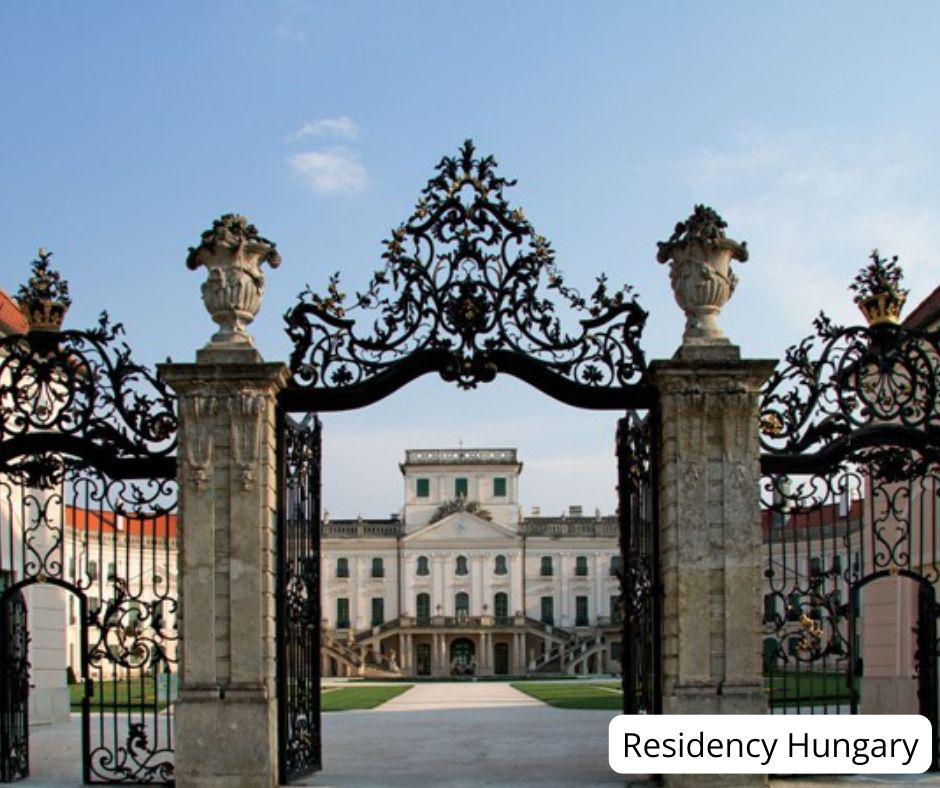
The most renowned landmark of Fertőd, the Esterházy Palace is the largest and one of the most magnificent Baroque palaces in Hungary. Situated near the Austrian border, the Esterházy Palace stands as Hungary’s most significant Baroque-Rococo architectural ensemble and a major tourist attraction. Originally, a hunting lodge occupied the site.
The rise of the Esterházy family began in the late 16th century, and by the early 17th century they had become influential figures in Hungary’s political life. Their immense wealth was established during the Counter-Reformation, when Catholic or re-Catholicized nobles were granted vast estates in recognition of their loyalty to the Habsburg monarchy and the Church.
Commissioned by Prince Miklós Esterházy, the palace acquired its present form in the second half of the 18th century after nearly two decades of construction. Often compared to the great European palaces of Schönbrunn in Vienna and Versailles in Paris, it is widely known as the "Hungarian Versailles".
The palace reached its golden age between 1768 and 1790, when it was regarded as one of Hungary’s foremost cultural centers. The vast complex comprises 126 rooms, richly decorated in Rococo style. At its heart lies the grand ceremonial hall and adjoining music hall on the upper floor, whose impressive walls are articulated by Ionic half-columns. Beneath them is the sala terrena, which elegantly connects the palace to its Baroque gardens, flanked by the princely apartments. Guest suites were located on the upper floor.
On the ground floor, alongside the princely apartments, stood a reference library, while the western wing housed the celebrated Esterházy Gallery, once home to more than three hundred paintings. The eastern section of the horseshoe-shaped complex was complemented by a winter garden, or palm house.
The palace is surrounded by a five-hectare French garden inspired by the grounds of Versailles. In the 19th century, the park was redesigned into a Neo-Baroque landscape more in keeping with evolving tastes, and it remains a popular destination for visitors today. In the 18th century, the avenues were lined with smaller paths and clearings featuring pleasure pavilions, chapels, decorative vases, fountains, and statues.
Prince Miklós "the Magnificent" Esterházy maintained a renowned orchestra led by the distinguished Austrian composer Joseph Haydn, who served as the family’s resident composer and conductor. Under Haydn’s direction, the palace’s musical life gained international acclaim; it was here in 1772 that his Farewell Symphony was first performed. The palace’s musical events were highly esteemed by the Habsburg court and Empress Maria Theresa.
Following several years of restoration, both the central palace building and its gardens have been carefully renewed. The palace chapel, restored in 2001, was awarded the prestigious Europa Nostra Award.
Today, classical music continues to play a central role in the cultural life of Esterházy Palace. Upholding the family’s rich musical heritage, the palace hosts concerts and music courses throughout the year. The "Eszterházi Festivities" series attracts visitors from around the world. Regular programs include Baroque festivals, Haydn seminars, concerts, and masterclasses. During the summer months, performances are held in the palace’s grand halls. Each year, a series of events commemorates the great 18th-century composer. Visitors can also explore an exhibition in the music hall dedicated to Haydn’s work and the palace’s historic musical life.