

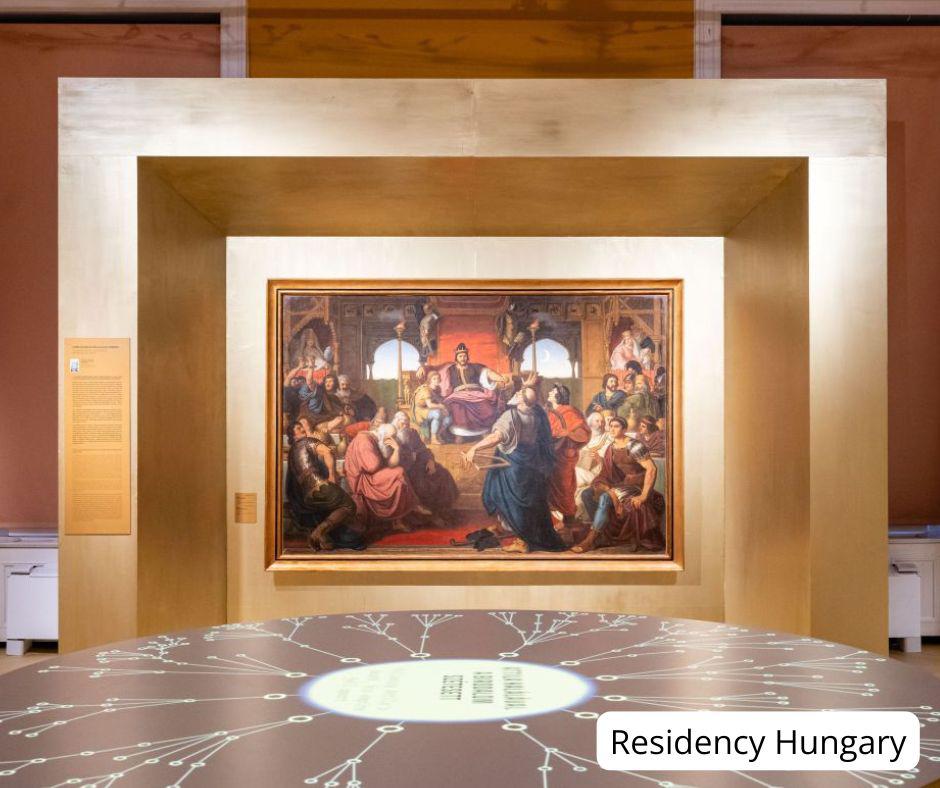
The Hungarian National Museum’s new Attila exhibition is one of the most significant exhibitions in Europe today. It presents the personality and legacy of the Hun ruler, evokes the figure of Attila and his era through some 400 artifacts from 64 museums in 13 countries and also gives information about the story of the Hun Empire, their customs, and the impact they had on later cultures around the world.
The exhibition uniquely examines the relationship between the myth surrounding Attila and historical reality in the light of the results of archaeology, history, art history, anthropology, archaeogenetics, and contemporary reflections.
It also features special jewelry from the Carpathian Basin and other parts of the former Hunnic Empire. These include bracelets, rings, necklaces, garnet necklaces, or even "Attila's poison cup", which was an electron chalice originally decorated with glass inlays and found near Szeged-Nagyszéksós.
The exhibition, running until July 12, is complemented by a rich series of accompanying programs.
Visitors can look forward to an international conference, scientific lectures, roundtable discussions, traditional family and children’s programs, museum education activities, craft workshops, book presentations, film screenings, and live music programs.